Payment Timing Strategies in Layered Cross-Format Prize Pools
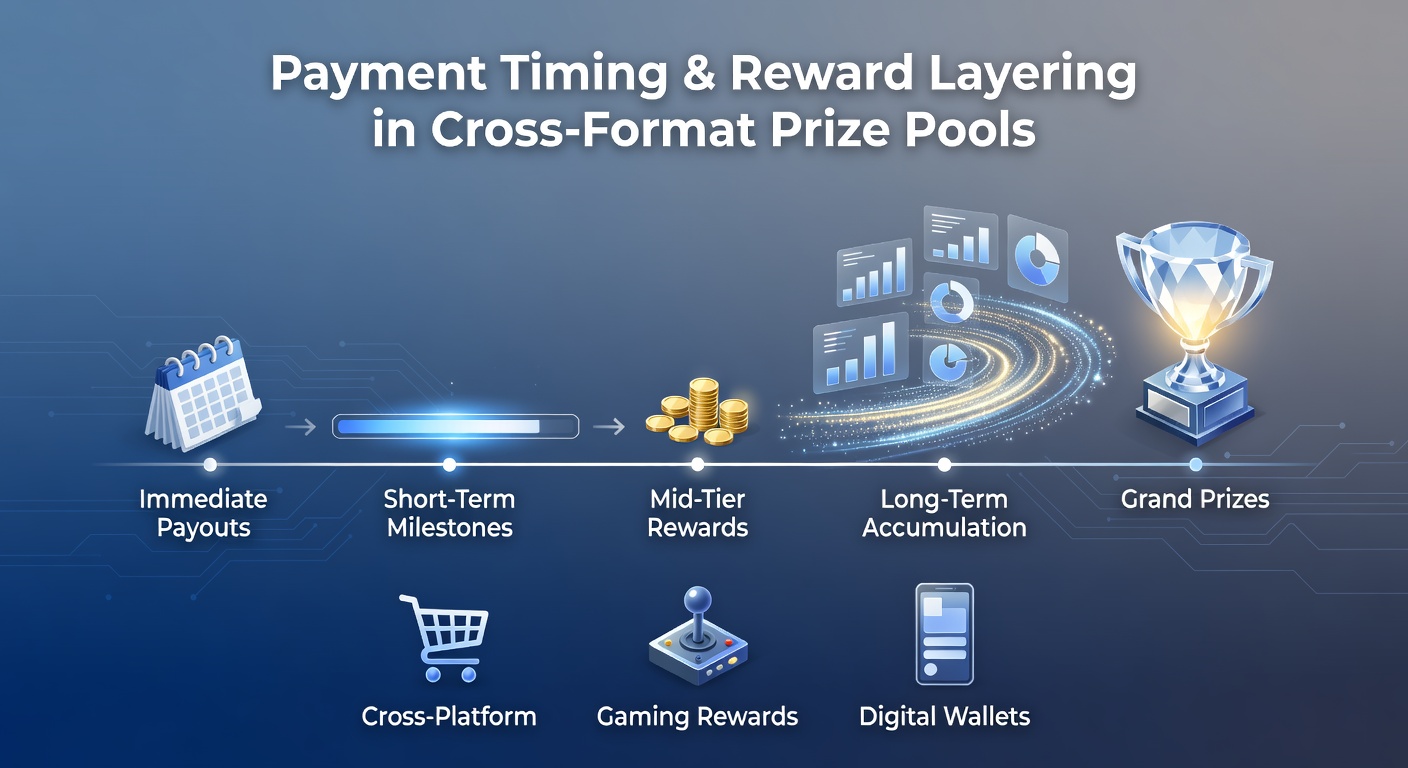
Payment timing plays a direct role in how reward layers activate within prize pools that span multiple gaming formats, including slots, live dealer tables, and hybrid progressives. Systems track deposit moments against reward thresholds so that instant credits unlock base bonuses while delayed processing sequences can shift access to higher tiers. Research from the Nevada Gaming Control Board shows transaction logs often determine whether players enter initial free spin layers or advance straight into jackpot contribution brackets.
Core Mechanics of Cross-Format Prize Pools
Cross-format prize pools combine contributions from varied game types into shared structures where rewards stack according to predefined sequences. Deposits processed within seconds feed into the first reward layer, granting immediate entry to bonus rounds, whereas withdrawals that clear after several hours may align instead with secondary progressive escalations. Data from iGaming Ontario indicates that 68 percent of multi-format pools adjust reward eligibility based on the exact minute a payment clears the gateway.
Layering occurs through automated triggers that monitor account balances in real time. A deposit arriving during peak server load might route through a verification queue that delays reward activation by 12 to 18 minutes, allowing the system to recalculate pool percentages before granting access. Observers note this creates natural synchronization points where players receive tiered credits only after the payment timestamp matches internal reward clocks.
Alignment Between Deposit Speed and Reward Activation
Instant deposit methods such as e-wallets and certain cryptocurrencies create tight alignment with the lowest reward layers, unlocking free spin allocations and base bonus multipliers within the same minute the funds arrive. Slower bank transfers, by contrast, often bypass early layers and land directly in mid-tier structures because the extended processing window coincides with pool recalculations that occur every 30 minutes. Studies conducted by the University of Nevada, Las Vegas Center for Gaming Research reveal that timing variances of under five minutes can shift reward outcomes by as much as 22 percent in hybrid prize environments.
Withdrawal Timing Effects on Progressive Contributions
Withdrawals processed before reward layers fully mature frequently reduce a player's contribution share to the next progressive cycle. When a cash-out request clears during an active bonus window, the system removes the associated funds from ongoing pool calculations, which in turn lowers the percentage allocated to higher jackpot tiers. Platforms that introduced synchronized withdrawal protocols in May 2026 now allow players to schedule cash-outs around specific reward completion times, preserving eligibility across formats.
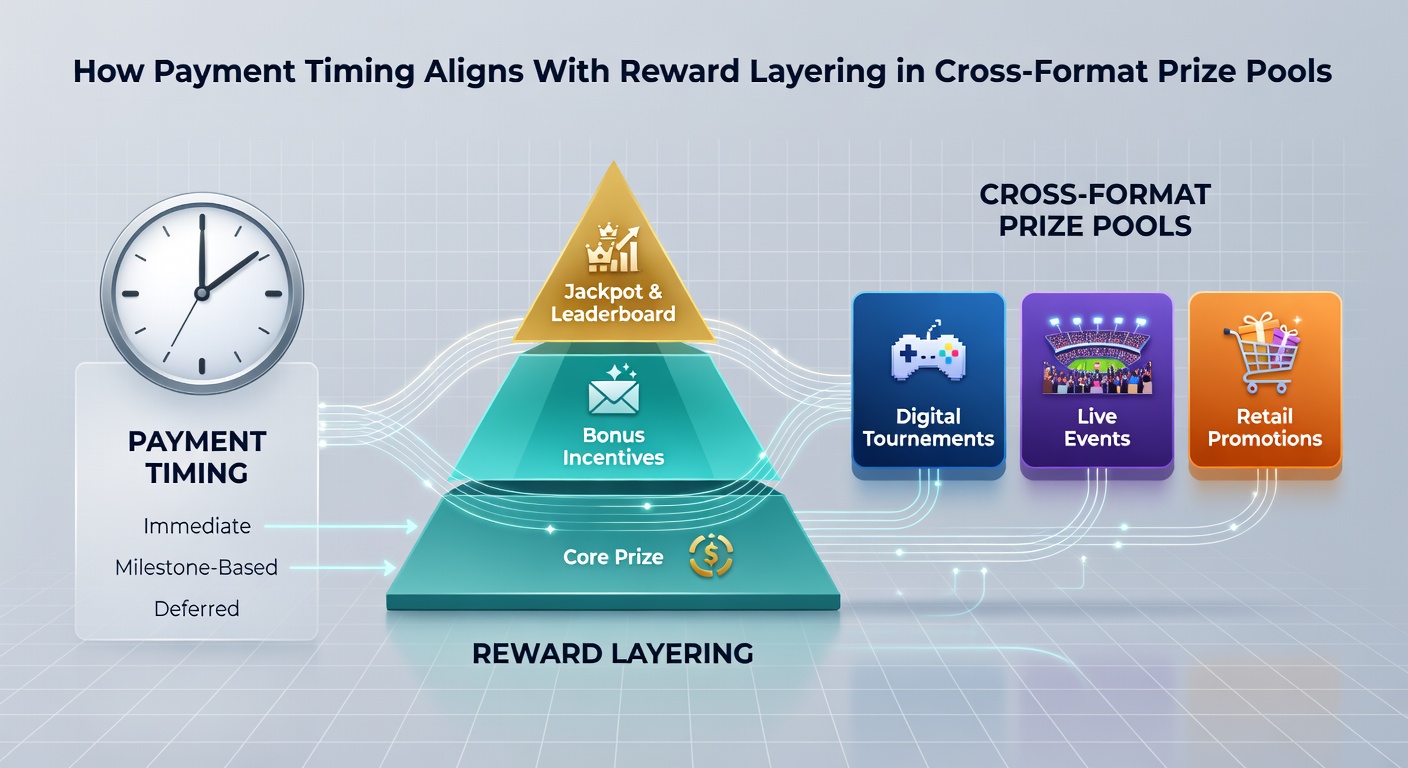
Regional Regulatory Influences on Timing Standards
Regulatory frameworks in different jurisdictions set minimum processing windows that indirectly shape reward layering. The New Jersey Division of Gaming Enforcement requires all licensed operators to log payment timestamps with one-second precision, enabling precise matching against reward schedules. Similar requirements in Australian state licensing regimes enforce daily reconciliation cycles that force platforms to align withdrawal requests with the close of each 24-hour reward period. These rules create consistent patterns where payment timing determines whether layered bonuses carry over into the following cycle or expire at the current tier.
Industry reports compiled by the European Gaming and Betting Association document that operators using unified payment ledgers across desktop and mobile environments achieve tighter synchronization between deposits and multi-format rewards. The same reports note that platforms without such ledgers experience frequent mismatches, resulting in players missing intermediate layers entirely.
Practical Examples of Timing and Layer Interactions
One documented case involved a player who deposited via instant bank transfer at 14:07 UTC, triggering immediate access to a free spin layer within a slots-to-table-games prize pool. The same player initiated a withdrawal at 14:22 UTC that cleared before the next progressive recalculation, shifting their remaining balance into a higher jackpot bracket rather than resetting to the base tier. Analysts tracking similar sequences across multiple sites report that such timing windows occur most reliably when payment gateways operate on sub-three-minute verification standards.
Another pattern emerges when scheduled maintenance windows overlap with payment processing. Systems that pause reward layering during these periods automatically defer activation until service resumes, creating predictable gaps that affect both deposits and withdrawals equally. Data collected through 2025 and into 2026 shows these deferrals most commonly impact mid-tier bonuses that require continuous account activity across formats.
Conclusion
Payment timing functions as a core variable within layered prize pool mechanics, determining which reward sequences activate and when players advance between formats. Precise timestamp matching, regulatory logging requirements, and platform-specific processing speeds all contribute to the alignment process. As systems continue to refine synchronization capabilities, the relationship between transaction moments and reward tiers remains a measurable factor in cross-format prize distribution.